NHSFFP released the following press release on January 8th, following the first votes in the NH House of the new legislative year.
Legislation
2026 Session Begins
Jan 8, 2026
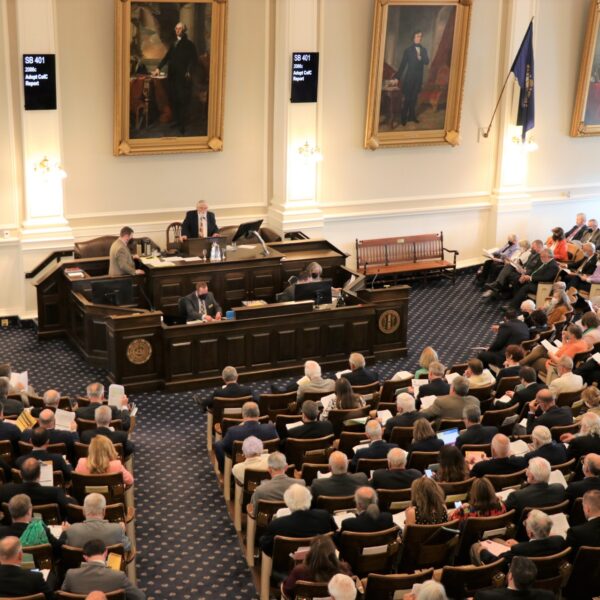
NHSFFP released the following press release on January 8th, following the first votes in the NH House of the new legislative year.
January 8: This week, the New Hampshire House took its first votes of the legislative session on a slate of bills with major implications for State revenue, public education funding, and local property taxes.
“These votes are the first taken since the New Hampshire Supreme Court’s groundbreaking ruling in the ConVal school funding case that found the State was underfunding public schools by at least $500 million per year and downshifting that cost to local property tax payers,” said NHSFFP’s Executive Director Zack Sheehan. “These early votes are a good gut check of where lawmakers are choosing to focus their priorities this year.”
Among the bills considered were several that would have meaningfully addressed school funding shortfalls, property tax relief, and long-standing inequities identified by the courts. Most of those proposals were rejected.
House Bill 651 was the major school funding bill on the docket this week. It would have increased State funding for public education and aligned adequacy aid with the minimum floor set by the ConVal decision, in addition to more funding for special education and English language services.
“The Legislature had a very clear path to start addressing the NH Supreme Court’s ruling by moving forward with House Bill 651. Not only did they choose to ignore the ruling and deny more funding for our public schools, but they also rejected House Bill 491 that would have simply established a study committee to identify ways to reduce property taxes,” Sheehan added.
Another proposal, House Bill 155, which passed, will further reduce business taxes by an estimated $30 million despite the lack of evidence that this has a positive impact on economic development. Paired with gutting House Bill 366 which would have increased funding for school buildings, these votes highlight a familiar tradeoff: lawmakers continue to arbitrarily cut State revenue while in the same breath claiming there is not enough funding to meet core responsibilities like special education and safe buildings.
One proposal that was rejected was House Bill 675, which would have taken decision-making authority away from local voters and communities, replacing it with rigid, statewide formulas that fail to account for the real costs districts face. “Rejecting House Bill 675 avoids locking in funding disparities between communities and prevents cuts to student programming that could have resulted if state-mandated costs increased without any local flexibility,” Sheehan said.
Taken together, these votes suggest that despite clear guidance from the courts, the legislature is once again choosing to prioritize revenue reductions and inaction over meaningful steps toward fixing New Hampshire’s school funding system.
* * * * * * * *
The mission of the NHSFFP, a registered 501(c)(3), is to inform the public about the condition of New Hampshire public schools and their funding; to advocate for changes to make the system more equitable for students and taxpayers alike; and, if necessary, to prosecute, manage, control, and/or participate in a lawsuit challenging the constitutionality of the system for funding education in New Hampshire.
On Background:
Cutting Revenue While Claiming Scarcity: The House passed HB 155, as amended, continuing a decade-long trend of reducing the Business Enterprise Tax paid primarily by large, profitable corporations. The reduction is estimated to cost the State roughly $30 million per year.
School Building Aid Stripped of Substance: HB 366, which would have updated school building aid to reflect dramatic increases in construction costs, passed only after the bill’s original language and funding were stripped out entirely and replaced with administrative processes. Under current law, school building aid is capped at $50 million statewide, a limit that has not kept pace with inflation or construction costs. As a result, many districts, particularly those without significant local property wealth, have been forced to rely on temporary fixes or defer maintenance altogether, leading to unsafe and unhealthy conditions for students and staff.
HB 491, which would have established a committee to study alternative revenue sources for public education and ways to reduce reliance on local property taxes, was rejected despite not proposing any immediate policy changes.
HB 651 would have increased the four components of adequacy aid by just over 70 percent, bringing base adequacy to $7,356 per pupil, the minimum amount required by the Supreme Court, and increasing aid for special education, English Language Learners, and students from low-income households. Its rejection leaves State funding levels far below what courts have determined is constitutionally required.
Rejection of a Statewide School Budget Cap: The House also voted Inexpedient to Legislate on HB 675, a bill that would have imposed mandatory budget caps on every school district in the state. Granite Staters have already rejected similar caps at the local level, often by overwhelming margins, and lawmakers previously declined to include similar language in the State budget.