Legislation
A Big Week for School Funding at the State House
Jan 23, 2026
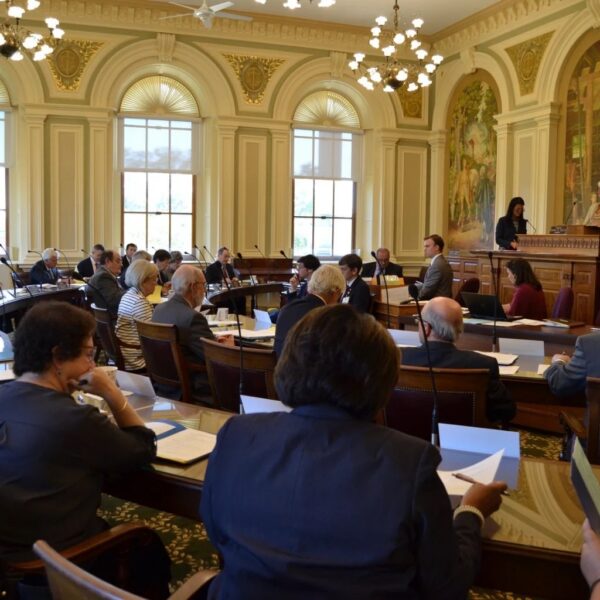
Just three weeks into the 2026 legislative session, this week highlighted just how consequential and central the debate around the future of public education funding and property taxes will be at the legislature. Across both chambers, lawmakers started to take up the large slate of proposed bills that, taken together, highlight the growing pressure on the Legislature to confront long-standing inequities in how the state funds public education and the heavy reliance on local property taxes to make up the difference.
Between both the House and Senate, there were several significant proposals that had public hearings that would have dramatically different impacts on students, school districts, and taxpayers. If enacted, the proposals considered this week range from targeted changes affecting individual districts, such as Manchester, to systemic reforms that would shift hundreds of millions of dollars in education costs from local property taxes back to the State.
__________________
“This week shows that education funding and property taxes are taking center stage in the early weeks of the legislative session,” said Zack Sheehan, Executive Director of the New Hampshire School Funding Fairness Project. “The proposals that had public hearings this week range from serious attempts to address the deep inequities called out in recent court rulings, to bills that would continue to ignore the problem and downshift costs onto local property taxpayers. But one thing is clear: legislators in both parties and both chambers are feeling the pressure to seriously address the lack of funding from the state and our unsustainable property taxes, and the status quo is no longer defensible.”
__________________
The New Hampshire School Funding Fairness Project closely tracked six policies: SB 582, SB 584, HB 1799, HB 1831, HB 1835, and a nongermane amendment to HB 1300. NHSFFP testified on several of these policies, joining school board members, local officials, and community advocates from across the state who shared firsthand accounts of how the current funding system is failing students and taxpayers alike.
At the center of the week’s debates were two core issues that have been repeatedly underscored by recent court rulings: the State’s failure to fund base adequacy at constitutionally required levels, and the severe underfunding of special education services. HB 1799, HB 1835, SB 582, and SB 584 were all introduced as direct responses to those failures. While they all take different approaches, each of these policies would begin shifting responsibility for public education costs back to the State by increasing base adequacy funding to the minimum level required by the courts and substantially increasing the State’s share of legally required special education services. Testimony from school board members, local officials, and advocates made clear that these changes are not abstract policy choices. They would reduce wildly unequal property tax rates, improve budget stability for districts, and help ensure that students’ access to educational opportunity does not depend on the property wealth of the community they live in.
At the same time, this week’s hearings highlighted sharp contrasts in how lawmakers are choosing to approach these challenges. Some proposals would begin to address long-standing inequities by shifting responsibility back to the State and responding directly to recent court rulings. Others would continue, or even deepen, the practice of downshifting costs and risk onto local communities.
That contrast was particularly evident in the nongermane amendment to HB 1300, which would recreate the core impact of HB 675, a bill that was rejected during the first week of the legislative session. While framed as a broader property tax limitation, the amendment would cap how much school districts, cities, towns, and counties can raise to fund their budgets using a rigid formula that does not reflect real or unpredictable costs. Similar school budget caps have already been rejected by voters when proposed directly at the local level, and by lawmakers when nearly identical language was removed from the State Budget. Reintroducing the same policy through a different mechanism does not change its impact on schools or communities.
What was unmistakable, however, is that education funding and property taxes are no longer being treated as peripheral issues. Lawmakers in both parties and both chambers are grappling openly with the scale of the problem, the legal obligations established by the courts, and the consequences of continued inaction.