Communities across New Hampshire are bracing for significant declines in the amount of state education aid they will receive in the year ahead. Due to the impact of the COVID-19 pandemic and to the expiration of two forms of targeted aid now available to local school districts, the Office of the Legislative Budget Assistant projects that state education aid will decline by nearly $90 million from FY2021 to FY2022. As a result, many cities and towns may be forced, yet again, to increase local property taxes to compensate for the loss of such aid and to ensure that children continue to receive a quality education. As families and businesses across New Hampshire continue to struggle in the face of the pandemic, the Legislature must act to prevent these declines and to forestall sizable property tax increases.
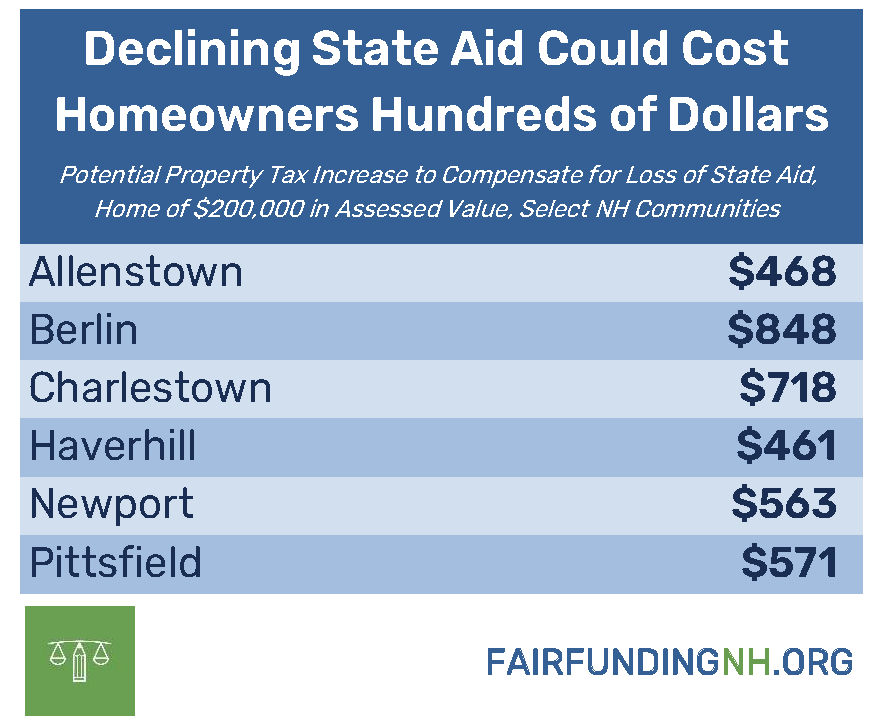
In the absence of legislative action, the local property tax rate increases necessary to offset the loss of such aid could be substantial in some communities. While the consequences will be felt across the state, the potential rate increase would exceed $2 per $1,000 of assessed valuation in more than 20 municipalities, including Allenstown, Claremont, Northumberland, and Pittsfield. In such communities, a family with a home worth $200,000 in assessed value could see a property tax increase of $400 or more to make up for the decline in state education aid.
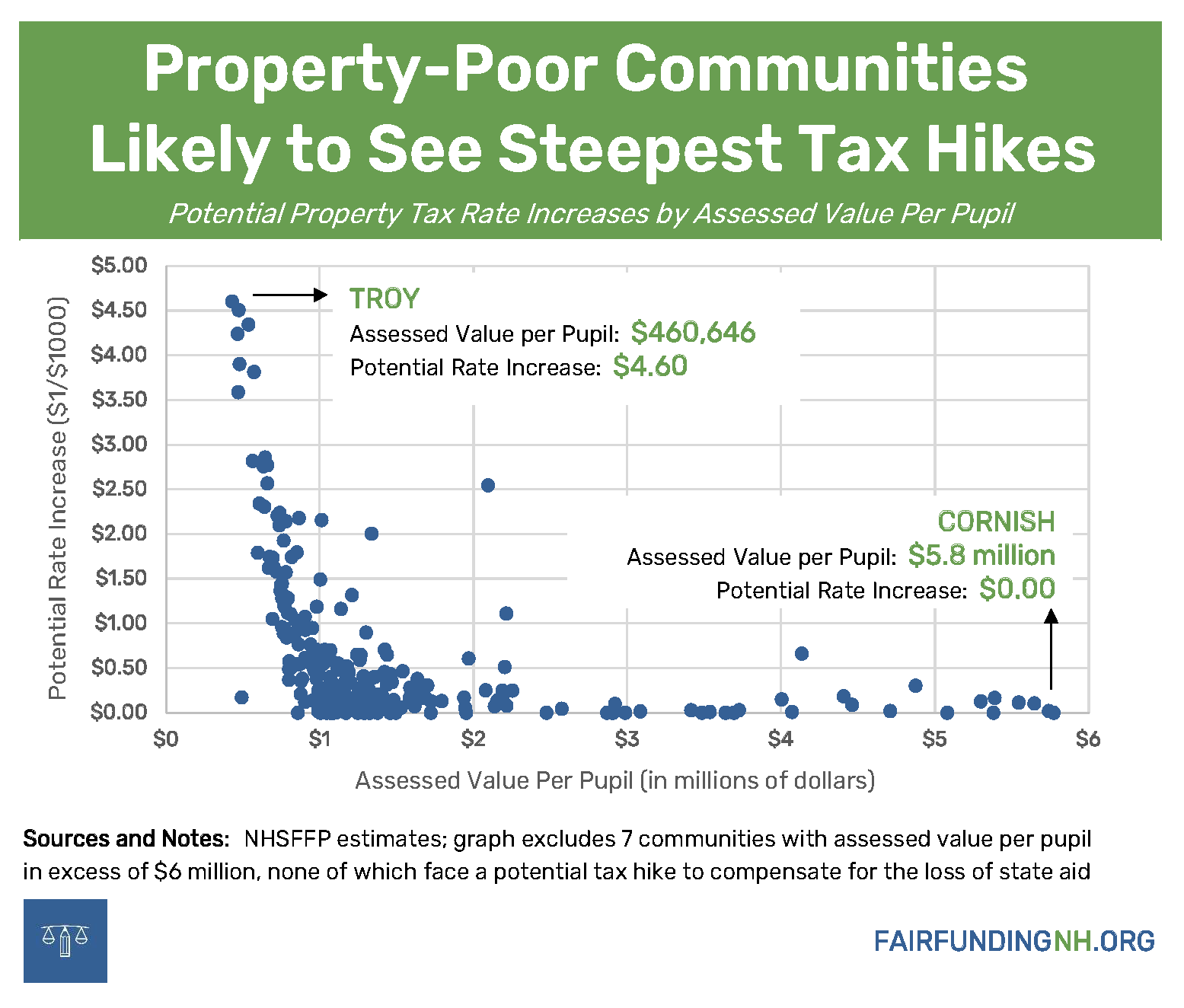
Given the existing inequities in New Hampshire’s school funding system, it should come as no surprise that the communities that would need to resort to the largest rate increases are those with the least capacity to bear them. As seen below, cities and towns with the lowest assessed property value per pupil could see the highest rate increases, while communities with comparatively high property values would experience much more modest changes. As it stands to lose more than $2 million in education aid between FY21 and FY22 and has an assessed value of approximately $465,000 per pupil, Berlin would need to resort to a local property tax increase of more than $4 per $1,000. Conversely, Bartlett would have to rely on a rate increase of just $0.02 per $1,000 to make up the difference, since its assessed value per pupil is over $4.7 million and its education aid is expected to fall by only $21,000.
For the sake of all New Hampshire families and the strength of the state’s economy, preventing these kind of property tax increases must be among the Legislature’s top priorities in the coming weeks. The surest way to accomplish that is to bolster education aid, preserving recent progress in providing additional assistance to those communities where it is needed most and insulating school finances from the ravages of the pandemic.
