Watch this short video on how to submit testimony on the State Budget online, or follow the step-by-step instructions below.
Not sure what to write for your testimony? Scroll to the bottom of this page for a sample that you can copy and paste.
Watch this short video on how to submit testimony on the State Budget online, or follow the step-by-step instructions below.
Not sure what to write for your testimony? Scroll to the bottom of this page for a sample that you can copy and paste.
Click on this link to go to the General Court’s Website:
https://gencourt.state.nh.us/house/committees/remotetestimony/default.aspx
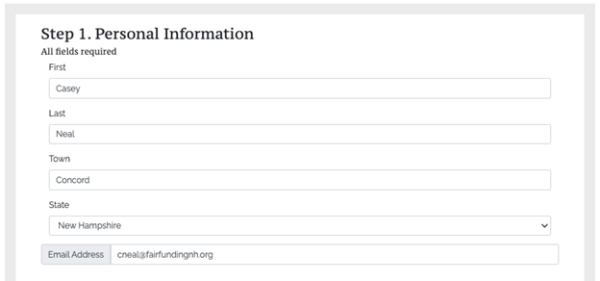
Fill out Step 1: Personal Information
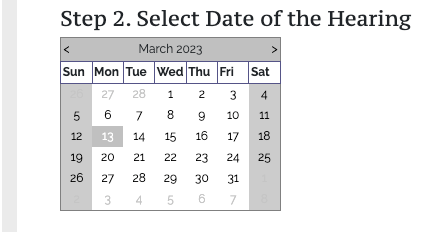
Step 2: Select Date of Hearing
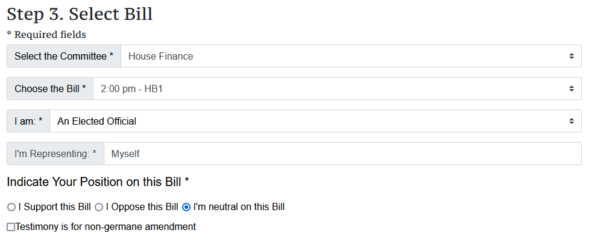
Step 3: Select Bill
Do not click the box for “testimony is for non-germane amendment”
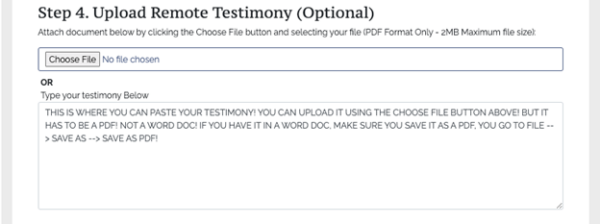
Step 4. Upload Remote Testimony (Optional)
*Note, this says “optional” because you can sign-in in support or opposition of a bill without submitting testimony. That is not the goal of this particular exercise for HB1. Please submit testimony if you can. If you aren’t sure what to say, we have an example below that you can copy and paste into the testimony webpage.
Step 5. Final Review
Now you can submit your testimony. Your testimony will be considered part of the public record of the hearing, and also has to be considered by the committee. Click Submit, and you are all done!
Noah and Casey would greatly appreciate it if you would shoot us a quick note to let us know you sent in testimony. It helps us know how many people the committee heard from about this so we can measure impact.
You can copy and paste our emails and just put in the subject line “I submitted testimony”. cneal@fairfundingnh.org, ntelerski@fairfundingnh.org
Feel free to copy this sample text and paste it into the testimony submission form.
Chairman Weyler and Members of the House Finance Committee,
I urge you to include a solution to New Hampshire’s inequitable and unfair school funding system in this budget.
Local property tax payers are responsible for the bulk of school funding because the State only pays an average of $4,700 per student each year. The average amount that school districts spend is actually about $20,000 a year per student in New Hampshire. Making property tax payers foot the bill for the difference produces tax rates that differ drastically from town to town. This system is putting the most stress on our communities with the highest need.
If the State took responsibility for education costs, as is their constitutional duty, it would have positive impacts for communities in our state that are negatively impacted by our current system. Students would have access to more educational opportunities, and taxpayers would see their local property tax rates reduced.
It is past time the State lived up to its duty to fund an adequate education. Use this budget to fulfill the state’s responsibility to fund education.
Respectfully,