News
State Appeals Rand Ruling and Asks Supreme Court to Overturn Claremont
Feb 25, 2026
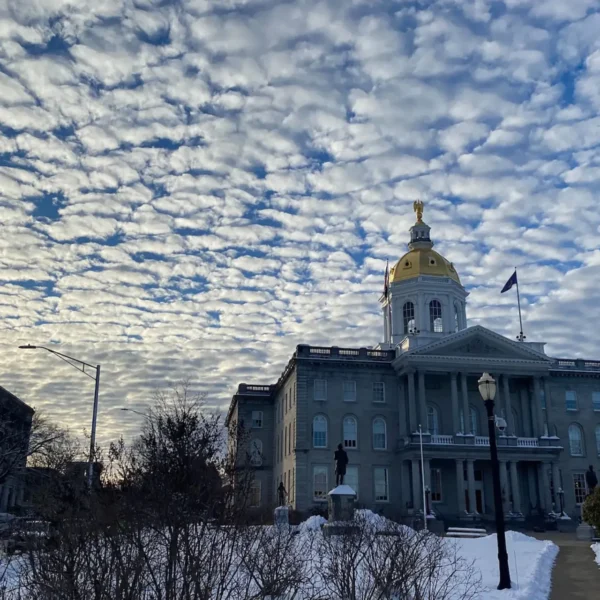
The New Hampshire School Funding Fairness Project released the following statement in response to the State’s Notice of Appeal in the Rand school funding case.
In its Notice of Appeal filed yesterday (February 24, 2026) in the Rand school funding lawsuit, the State of New Hampshire formally asked the New Hampshire Supreme Court to overturn the landmark Claremont decisions that have defined the State’s constitutional duty to fund public education for more than three decades.
The filing explicitly asks the court to “overrule Claremont Sch. Dist. v. Governor, 138 N.H. 183 (1993) (Claremont I), and its progeny” and to hold that Part II, Article 83 of the New Hampshire Constitution does not mandate a qualitative standard of education and does not impose a financial obligation on the State to fund it.
The State further asks the court to overrule Claremont II (1997) and adopt the dissent from that case – an extraordinary request that, if granted, would dismantle 30 years of precedent requiring the State to define, fund, and ensure the delivery of an adequate education for every child in New Hampshire.
“For years, some lawmakers and state leaders have said they were not trying to overturn Claremont,” said Zack Sheehan, NH School Funding Fairness Project Executive Director. “In this filing, the State is formally asking the Supreme Court to do exactly that.”
This appeal does not stand alone.
At the same time the State is asking the court to erase decades of precedent, legislative leaders are advancing nearly identical bills – HB 1815 in the House and SB 659 in the Senate – that rewrite core sections of New Hampshire’s education adequacy statutes. HB 1815 is sponsored by Representative Bob Lynn, former Chief Justice of the New Hampshire Supreme Court. SB 659 is sponsored by Senate President Sharon Carson, who has publicly described the legislation as the Legislature’s response to recent court rulings.
Those bills remove longstanding statutory language guaranteeing students the “opportunity” for an adequate education, redefine public education as an “integrated system of shared responsibility” without clearly defining the State’s financial obligation, and declare that funding determinations are political policy matters reserved to the legislative and executive branches.
Taken together, the appeal and these bills represent a coordinated effort to narrow the legal standards governing the State’s constitutional obligation to fund public education.
“If the court were to adopt the State’s position, and these bills were enacted, lawmakers could claim compliance on paper while the underlying funding disparities remain,” Sheehan said. “Overturning Claremont does not reduce property taxes. It does not increase support for students. It does not address the inequities that school districts across New Hampshire face every day.”
For more than 30 years, the New Hampshire Supreme Court has consistently held that the State has the duty to define an adequate education, determine its cost, fund it with constitutional taxes, and ensure its delivery. The State’s appeal now asks the Court to revisit, and potentially abandon, that constitutional framework.
“The courts have repeatedly affirmed that education is a fundamental right under our Constitution,” Sheehan added. “The solution to addressing the lack of school funding from the state and the resulting high and unequal property taxes is not to erase the constitutional standard. It is to meet it.”
* * * * * * * * * * * * * * * * * * * * * * * * * * * * * * * *
News Coverage: