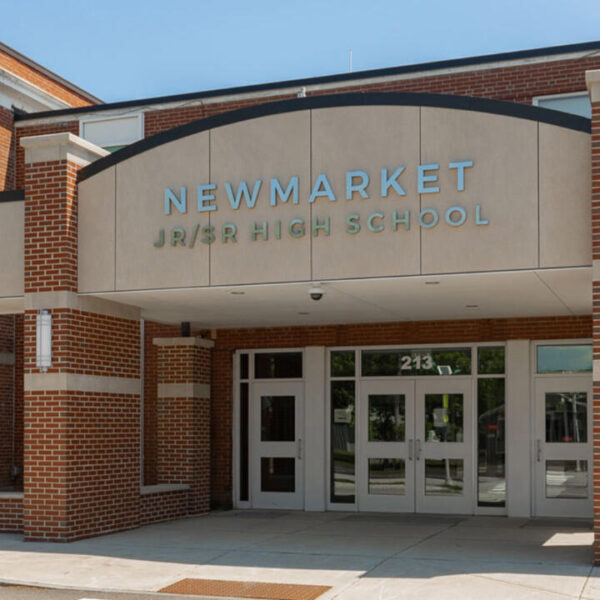
A Community’s Investment in Itself
I. The Inheritance at Stake
Imagine walking into a packed gym. Before you reach the door, you hear the echo of cheers and the referee’s whistle cutting through the noise. Familiar faces fill the bleachers and school colors wash over the scene. This is your town: the home of the Newmarket Mules.
It is easy to bask in nostalgia or hometown pride, but none of this is guaranteed. Years ago, Newmarket faced the possibility of losing its high school when aging buildings no longer passed inspection. The choice was stark: raise the money to renovate, or close the school and send students elsewhere. Closing the high school would have meant saying goodbye to the Mule.
At the center of it all was that inheritance.
Proposals to renovate or rebuild circulated and stalled. The junior-senior high school, built in 1923, faced mounting facility concerns. At one point, the district seriously weighed tuitioning students to the neighboring Oyster River district.
The debate stretched across eleven years.
In April 2017, despite a major snowstorm on Town Meeting day, residents approved a $39 million bond to renovate both schools. The measure required 60% to pass. It received 74%.
By November, the impact appeared in residents’ tax bills. The first interest payment was built into the new rate, an obligation that will extend until 2046. The renovations replaced temporary fixes with permanent space designed for growth: new early learning classrooms and secure entry at the elementary school; expanded academic, arts, and athletic facilities at the junior-senior high school.
These were structural investments made at a pivotal moment. They were also deeply personal. Property tax rates in Newmarket sit roughly 46% above the state average, and residents shoulder that cost.

Superintendent Todd Allen understands the scale of that decision. Having spent decades in the neighboring Oyster River district, he saw firsthand what a larger system could offer. He also understood what a small town stands to lose when its school is no longer its own. In the end, Newmarket chose to keep its schools and the identity wrapped up in them.
II. What Investment Built
Today, the Newmarket School District serves just under 1,000 students across two buildings, including an in-house Pre-K program that allows early support to begin before kindergarten. About 21% of students qualify for free and reduced price lunch, slightly below the statewide average of 26%, and roughly 20% receive special education services, mirroring the state average. In a district this size, every staffing decision and unexpected cost is felt more immediately than in a larger system.
In this environment, continuity becomes an asset. Few embody it more fully than physical education teacher Nancy Miller, whose career has extended well beyond a traditional gym class. Whether returning from the snowshoe trail with students or mentoring University of New Hampshire interns, her work reflects creativity grounded in long-term investment in the community. As she prepares for retirement, the foundation she has built endures. “We have high expectations of ourselves and our community,” she says, a standard that has shaped generations of students and future educators alike.
The results of that investment appear in daily life. During the annual Newmarket Has a Heart Spirit Week, second graders collect food and personal care items and make soup for the Newmarket Community Church Food Pantry, connecting classroom lessons with community needs. Fifth graders have the opportunity to serve as student ambassadors, representing peers at school board meetings. Each spring, graduating seniors return in caps and gowns, walking the halls as younger students line the corridors to cheer them on.

Many of those seniors began here in Pre-K or kindergarten. When childhood unfolds in the same buildings and families see familiar teachers year after year, trust deepens. School becomes the backdrop to growing up and the training ground for civic life. The town’s decision to invest ushered in a period of stability and continuity that marked a pivotal shift in the district’s health.
Five years ago, that shared responsibility extended to the playground, where the PTA led an effort to replace an aging structure with an accessible space that now welcomes students, families, and visitors.
III. Local Control, Lived
In recent years, Newmarket has also shifted how decisions are made. Teachers now help shape curriculum and school priorities through collaborative committees. The transition required adjustment, but over time it strengthened trust and clarified expectations.
That approach was evident when the elementary school applied for the EDies Award. The self-study process asked educators to examine whether daily practice aligned with shared values. Even without receiving the award, the exercise affirmed something important: the school’s culture was not accidental. It was intentionally and collectively built.
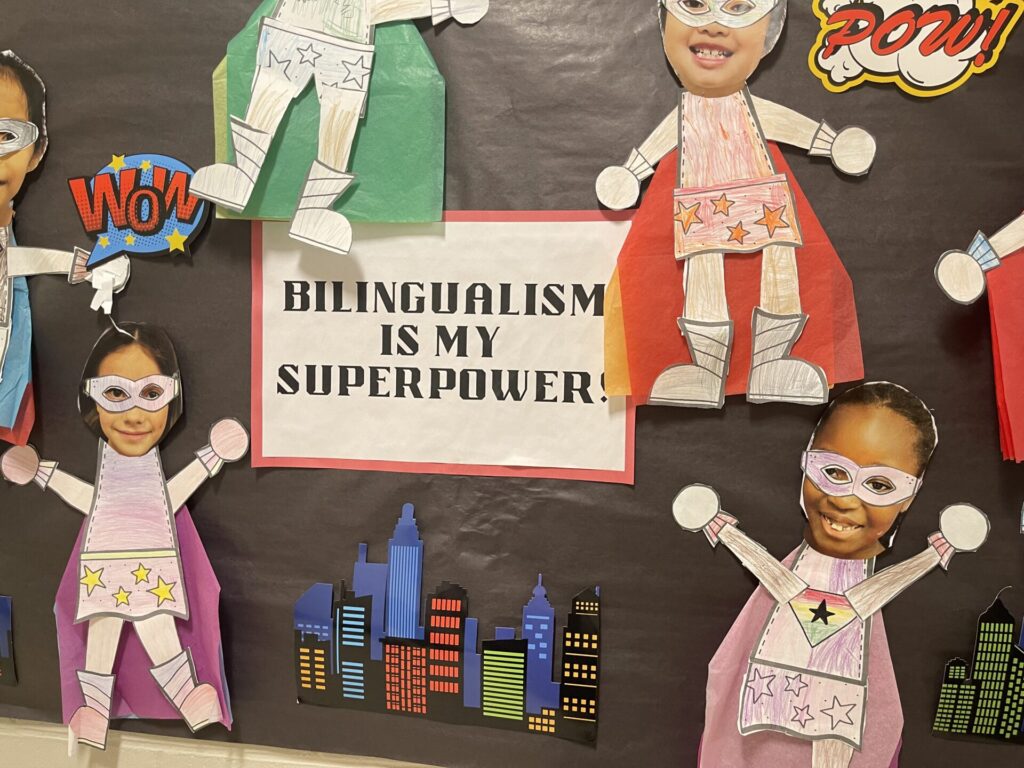
In Newmarket, local control is not a slogan but a lived reality: residents voting on bonds and accepting the tax implications; school board members serving as civilian stewards; teachers shaping the programs they implement; a community deciding what kind of education it wants for its children and backing that vision with resources.
And yet, there is a broader truth beneath this story. New Hampshire relies more heavily on local property taxes to fund public education than any other state in the country. The decade of deteriorating facilities, the years of public debate, and the bond payments that will stretch until 2046 are not only Newmarket’s story. They are the predictable outcome of a funding structure that places disproportionate responsibility on local taxpayers. As lawmakers consider education policy this session, the focus should not be on shifting costs or assigning blame, but on designing a system that fulfills the state’s constitutional responsibility to provide an adequate education. Every child in New Hampshire deserves access to that opportunity.
Since 2017, Newmarket has continued to evolve. Property values are rising and new residents are moving in. Next year, the town will celebrate its 300th anniversary, and the schools will be central to that milestone. In this community, schools are not simply buildings for instruction. They are places where history is carried forward, young people see who they might become, and civic decisions echo across decades.
___________________________________________________________________________
Written by Ashley Wade, Communications Director at the NH School Funding Fairness Project on February 27, 2026.